BloggerOn
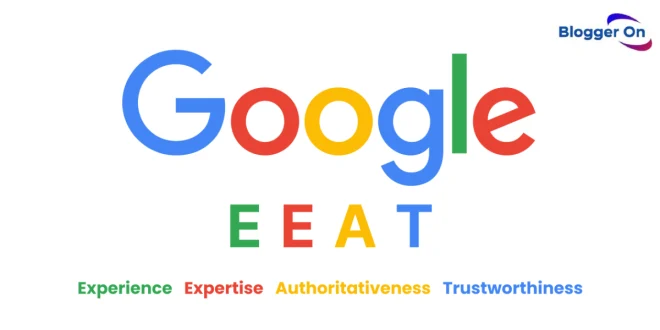
If you publish content online, you’ve probably heard of E-E-A-T. It stands for Experience, Expertise, Authoritativeness, and Trustworthiness. Google uses these ideas to describe what high-quality content looks like. But there’s a lot of confusion about what E-E-A-T actually is. Some people think it’s a ranking score. Others think adding an author bio or a few credentials will fix everything. Neither is true. E-E-A-T is a framework from Google’s guidelines for human quality raters. It helps Google understand what people find useful and trustworthy, and its ranking systems are built to reward content that fits those standards. With AI content flooding the web, these signals matter a lot. Pages that show real experience and earn trust tend to hold up better through algorithm updates. This article explains what each part of E-E-A-T means, how Google applies it today, and practical steps you can take to make your content meet that standard.
What E-E-A-T Stands For
E-E-A-T comes from Google’s Search Quality Rater Guidelines. These are instructions Google gives to thousands of people who review search results and rate their quality.
Originally, it was E-A-T. In late 2022, Google added an extra “E” for Experience. The full framework now looks like this:
- Experience: Has the creator actually done or used the thing they’re writing about?
- Expertise: Does the creator have the knowledge or skill needed for the topic?
- Authoritativeness: Is the creator or website known as a trusted source on the subject?
- Trustworthiness: Is the content accurate, honest, and safe?
Google has said trust is the most important of the four. The other three support it.
Experience: Have You Actually Done It?
Experience means first-hand knowledge. Did you use the product, visit the place, or go through the process yourself?
For many topics, personal experience is more useful than formal credentials. A product review from someone who used it for months is more helpful than a summary of the manufacturer’s specs. A travel guide from someone who visited the city beats one written from other websites.
Ways to show experience:
- Share what you personally did, saw, or learned
- Include original photos, screenshots, or examples
- Mention specific details only someone with real experience would know
- Talk about what didn’t work, not just what did
Expertise: Do You Know the Subject?
Expertise is about knowledge and skill. For some topics, it means formal training or credentials. For others, it means deep practical knowledge.
A doctor writing about medication has formal expertise. An experienced mechanic writing about car repair has practical expertise. Both count.
Ways to show expertise:
- Explain topics accurately and in depth
- Cover the details and exceptions, not just the basics
- Use correct terms but explain them clearly
- List relevant qualifications, training, or years of experience
- Have experts write or review content on complex topics
Authoritativeness: Are You a Go-To Source?
Authority is about reputation. It’s how others see you or your website in your field.
You can’t simply claim authority. It’s earned when other people recognize your work. That might look like:
- Other reputable websites linking to your content
- Mentions in news articles or industry publications
- Positive reviews and ratings
- Being cited by others as a source
- A strong track record in your niche
Authority often builds slowly. Consistently publishing useful content on a focused topic helps over time.
Trustworthiness: The Most Important Part
Google describes trust as the center of E-E-A-T. A page can have experience and expertise, but if it isn’t trustworthy, it won’t be considered high quality.
Trust depends on the type of page. An online store needs secure checkout and clear return policies. A news article needs accurate facts and clear sourcing. A medical page needs correct, safe information.
Signals that build trust:
- Accurate, up-to-date information
- Clear sources for facts and statistics
- Easy-to-find contact information
- A clear “About” page explaining who’s behind the site
- Transparent policies on privacy, returns, or refunds
- Secure website (HTTPS)
- Honest reviews and no misleading claims
Is E-E-A-T a Ranking Factor?
This is where people get confused. E-E-A-T itself is not a single ranking factor or score. Quality raters don’t directly change rankings either.
Instead, raters help Google test whether its algorithms are showing good results. Google then uses many signals in its ranking systems to identify content that aligns with E-E-A-T.
So while you can’t “optimize for E-E-A-T” with a single trick, creating content that meets these standards tends to align with what Google’s systems reward.
Why Some Topics Face a Higher Bar
Google applies stricter standards to what it calls “Your Money or Your Life” (YMYL) topics. These are subjects that could affect someone’s health, finances, safety, or well-being.
Examples include:
- Medical and health information
- Financial advice
- Legal information
- News about current events
- Safety topics
For YMYL content, expertise and trust matter even more. A health article written by someone with no background, and no expert review, is unlikely to be seen as high quality.
Where AI Content Fits In
AI tools have made it easy to produce large amounts of content fast. Google’s position is that AI content isn’t automatically bad. What matters is whether the content is helpful and created for people.
But Google has also cracked down on low-value content. Its spam policies now target “scaled content abuse,” which means mass-producing pages mainly to rank, whether by AI, humans, or both.
AI content often struggles with E-E-A-T because it lacks real experience. It can summarize what’s already online but can’t share first-hand stories or original insight.
If you use AI:
- Treat it as a draft, not a finished product
- Add your own experience and examples
- Fact-check everything
- Have a real person review and edit it
- Make sure the final piece adds something new
Signals That Show E-E-A-T on Your Site
Some elements help both users and search engines understand who you are and why they should trust you:
- Author bylines with a short bio and relevant background
- Author pages listing experience, credentials, and other work
- About page explaining your business, history, and team
- Contact page with a real address, phone, or email
- Publication and update dates on articles
- Sources and citations for facts and data
- Customer reviews and testimonials
- Schema markup to help search engines understand authors and organizations
These don’t guarantee rankings. But they make your content more transparent and credible.
Content Habits That Build E-E-A-T
E-E-A-T isn’t something you add at the end. It comes from how content is planned and written.
A common mistake is treating one target keyword for content writer briefs as the main goal. Keywords still help with topic targeting, but they’re not what makes content high quality. Useful, accurate, experience-based content is.
Better habits:
- Start with what your audience actually needs to know
- Include real examples, case studies, or data
- Write in a clear, honest voice
- Update older content when facts change
- Avoid exaggerated claims or clickbait headlines
- Focus each page on answering a question fully
Common E-E-A-T Mistakes
Watch out for these problems:
- Publishing content with no author or unclear ownership
- Writing about topics you have no real knowledge of
- Copying or lightly rewriting other websites
- Letting outdated information stay live for years
- Making health, money, or legal claims without sources
- Using fake reviews or made-up credentials
- Posting large amounts of thin AI content
E-E-A-T for Local Businesses
Local businesses can show E-E-A-T in simple, practical ways. You already have real experience in your field. The key is making it visible.
Try these:
- Share real project photos and before-and-after examples
- Highlight team members and their experience
- Keep your Google Business Profile complete and active
- Collect and respond to customer reviews
- Write content about local topics you know well
- Show licenses, certifications, and memberships
A plumber explaining common pipe problems in local homes, with real photos from past jobs, shows experience that generic content can’t match.
E-E-A-T and AI Search
More people now get answers from AI summaries and chat tools. These systems also tend to pull from sources that seem trustworthy and well-established.
Strong E-E-A-T signals may help your content get cited in AI-generated answers. Clear structure, accurate facts, and a solid reputation across the web all help.
A Quick E-E-A-T Checklist
Before publishing, ask:
- Does this show real experience with the topic?
- Is the author clearly identified and qualified?
- Are facts accurate and sourced where needed?
- Does it answer the reader’s question fully?
- Is it better or more useful than what’s already ranking?
- Would a reader trust this page enough to act on it?
If the answer to any of these is no, keep working on it.
Getting Help With Quality Content
Creating content that meets E-E-A-T standards takes time, research, and real expertise. Many businesses choose to work with writers or agencies who understand both SEO and quality guidelines.
If you’re comparing content marketing services Fort Lauderdale businesses use, ask how they gather first-hand knowledge, involve subject experts, and fact-check their work. Those details matter more than word count or keyword targets.
Final Thoughts
E-E-A-T isn’t a trick or a checklist you can game. It’s Google’s way of describing content that people can rely on. Show real experience, demonstrate knowledge, build a strong reputation, and above all, earn trust. Content that does these things tends to perform better in search and serve readers well, which is the whole point.