BloggerOn
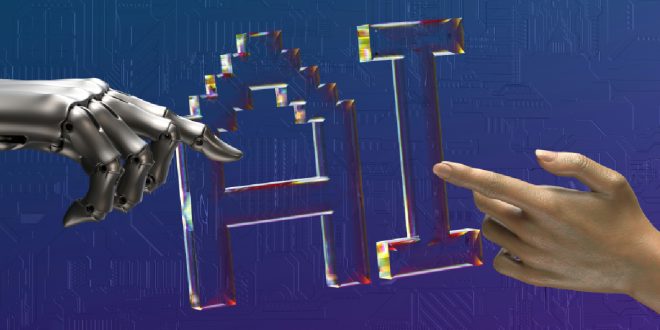
Think about your day from morning to night. You wake up to an alarm on your phone, check notifications, maybe ask a voice assistant about the weather, scroll through social media, order food, or watch a recommended show before bed. None of these actions feel extraordinary anymore—but behind many of them lies Artificial Intelligence.
What makes AI truly remarkable is not just its capabilities, but how quietly it integrates into daily life. It doesn’t demand attention; instead, it enhances experiences in subtle, often invisible ways. Over time, this quiet presence has begun reshaping how we communicate, work, shop, learn, and even think.
In this article, we’ll explore how Artificial Intelligence is influencing everyday life in meaningful ways, with real-world examples, thoughtful insights, and a realistic look at both its advantages and challenges.
Understanding Artificial Intelligence in Simple Terms
Before diving deeper, it helps to understand what Artificial Intelligence actually means in practical terms. AI refers to systems or machines that can perform tasks that usually require human intelligence—such as recognizing speech, learning from data, or making decisions.
Unlike traditional software that follows fixed rules, AI systems improve over time. They analyze patterns, adapt to new inputs, and become more accurate with use. This is why your phone’s keyboard gets better at predicting your words or why streaming platforms seem to “know” your taste.
At its core, Artificial Intelligence is about making technology smarter and more responsive to human needs.
How AI Became Part of Everyday Life
AI didn’t suddenly appear—it evolved gradually. What once required massive computing systems is now accessible through everyday devices. The shift happened as data became more abundant and computing power more affordable.
Today, AI is embedded in tools we use daily, often without us realizing it. The result is a smoother, faster, and more personalized digital experience.
AI in Smartphones: The Invisible Assistant
Smartphones are one of the clearest examples of how deeply AI is integrated into daily life. Most people carry a powerful AI-enabled device in their pocket, using it constantly without thinking about the technology behind it.
When your phone unlocks using your face, it’s analyzing unique facial patterns in milliseconds. When your camera automatically adjusts lighting and sharpness, it’s identifying objects and optimizing settings in real time. Even typing a simple message becomes easier because predictive text anticipates what you’re about to say.
Over time, these features adapt to your habits. Your phone learns how you write, what apps you use most, and even when you’re likely to check certain notifications. This continuous learning process is what makes Artificial Intelligence feel so natural and intuitive.
AI in Healthcare: A Quiet Revolution
Healthcare is one area where AI is creating meaningful impact beyond convenience. While patients may not always see it directly, AI is helping doctors diagnose diseases earlier, recommend treatments, and manage patient care more efficiently.
For example, AI systems can analyze medical images like X-rays or MRIs with remarkable accuracy. In some cases, they can detect patterns that might be missed by the human eye, especially in early stages of diseases like cancer.
Another important development is personalized medicine. Instead of a one-size-fits-all approach, AI can analyze a patient’s history, genetics, and lifestyle to suggest treatments tailored specifically to them.
| AI Application | Real-Life Impact |
|---|---|
| Medical Imaging | Faster and more accurate diagnosis |
| Virtual Assistants | 24/7 patient support |
| Predictive Analytics | Early detection of diseases |
| Wearable Tech | Continuous health monitoring |
While AI doesn’t replace doctors, it strengthens their ability to make better decisions, ultimately improving patient outcomes.
AI in Education: Learning That Adapts to You
Education has traditionally followed a fixed structure, where all students learn at the same pace. AI is changing that by making learning more personalized.
Instead of forcing students to adapt to a system, AI allows the system to adapt to the student. If someone struggles with a concept, AI-powered platforms can provide additional explanations or practice exercises. If a student learns quickly, the system can move them ahead.
Teachers also benefit from AI tools that analyze student performance and highlight areas where attention is needed. This helps educators focus their efforts more effectively.
The result is a more flexible and inclusive learning environment where individuals can progress at their own pace.
AI in Shopping: A Personalized Marketplace
Online shopping has become significantly smarter due to Artificial Intelligence. When you browse products or search for something online, AI systems analyze your behavior to predict what you might want next.
This is why you often see recommendations that feel surprisingly relevant. These suggestions are based on your browsing history, previous purchases, and even how long you spend looking at certain items.
AI also improves the overall shopping experience by enabling faster searches, better customer support through chatbots, and more secure transactions.
| Feature | How It Helps Users |
|---|---|
| Product Recommendations | Saves time and improves discovery |
| Chatbots | Instant customer support |
| Fraud Detection | Safer online transactions |
| Dynamic Pricing | Competitive and real-time pricing |
Instead of browsing endlessly, users can find what they need quickly, making shopping more efficient and enjoyable.
AI in Transportation: Smarter Ways to Move
Transportation has become more efficient thanks to AI-driven systems. Navigation apps now provide real-time traffic updates, helping users avoid congestion and reach destinations faster.
Ride-sharing platforms use AI to match drivers with passengers, optimize routes, and estimate arrival times accurately. These small improvements collectively save time and reduce stress.
Looking ahead, autonomous vehicles represent the next major step. While still developing, they have the potential to reduce accidents, improve fuel efficiency, and reshape urban mobility.
AI in Entertainment: Content That Understands You
Entertainment is no longer random—it’s curated. Streaming platforms, music apps, and social media use AI to analyze your preferences and deliver content tailored specifically to you.
Instead of searching endlessly for something to watch or listen to, users receive recommendations based on their behavior. Over time, these suggestions become increasingly accurate.
This personalization keeps users engaged, but it also raises questions about how much influence algorithms have on our choices.
AI in Finance: Smarter Financial Decisions
Managing money has become easier with AI-powered tools. From detecting fraudulent transactions to helping users track spending habits, AI plays a crucial role in modern finance.
Banks and financial apps use AI to identify unusual activity in real time, preventing fraud before it causes damage. At the same time, personal finance tools analyze spending patterns and offer suggestions to improve budgeting.
These systems provide insights that would be difficult for individuals to calculate manually, helping people make more informed financial decisions.
AI in Smart Homes: Living More Comfortably
Smart homes are another example of how AI enhances everyday life. Devices like smart thermostats, lighting systems, and security cameras learn from user behavior and adjust automatically.
For instance, a smart thermostat can learn your schedule and adjust the temperature accordingly, saving energy while maintaining comfort. Similarly, smart lighting systems can adapt to your preferences without manual input.
Over time, these systems create an environment that feels intuitive and responsive.
Benefits of Artificial Intelligence in Daily Life
The growing presence of Artificial Intelligence brings several clear advantages. It saves time by automating repetitive tasks, improves accuracy by reducing human error, and enhances convenience by simplifying complex processes.
Perhaps the most noticeable benefit is personalization. Whether it’s content recommendations, shopping suggestions, or learning experiences, AI tailors interactions to individual preferences.
This shift toward personalized experiences is one of the defining features of modern technology.
Challenges and Concerns
Despite its benefits, AI is not without challenges. One of the biggest concerns is data privacy. Since AI systems rely heavily on data, users often share personal information, sometimes without fully realizing it.
There is also the issue of job displacement. While AI creates new opportunities, it can also replace certain types of work, particularly repetitive tasks.
Ethical considerations are equally important. Questions about bias, transparency, and accountability continue to shape discussions around AI development.
Addressing these challenges requires careful planning, regulation, and responsible use.
The Future of Everyday Life with AI
Looking ahead, AI will become even more integrated into daily life. We can expect smarter personal assistants, more efficient cities, and improved healthcare systems.
However, the real impact will depend on how we choose to use this technology. AI has the potential to enhance human capabilities, but it must be guided by thoughtful decision-making.
Frequently Asked Questions (FAQs)
What is Artificial Intelligence in simple terms?
Artificial Intelligence refers to machines or software that can perform tasks requiring human-like thinking, such as learning, problem-solving, and decision-making.
How is Artificial Intelligence used in daily life?
It is used in smartphones, healthcare, education, online shopping, finance, transportation, and entertainment.
Is AI making life easier?
Yes, AI simplifies tasks, saves time, and provides personalized experiences, making everyday activities more efficient.
Is Artificial Intelligence safe to use?
AI is generally safe, but users should be aware of privacy and data security concerns.
Will AI replace human jobs?
AI may replace some roles but will also create new opportunities that require different skills.
What is the future of Artificial Intelligence?
AI will continue to evolve, becoming more advanced and deeply integrated into daily life.
Conclusion
Artificial Intelligence is no longer a futuristic concept—it is a part of everyday reality. It shapes how we interact with technology, influences our decisions, and improves the efficiency of daily tasks.
What makes AI truly powerful is not just what it can do, but how naturally it fits into our lives. As it continues to evolve, the focus should not be on replacing humans, but on enhancing human potential.
Understanding how AI works—and using it wisely—will be essential in navigating the future.